When you walk into a casino, the bright lights and colorful machines grab your attention first. But there’s another element working just as hard to keep you engaged: sound. Every beep, jingle, and background melody in a casino is carefully planned to create a specific mood and influence player behavior.
Casino sound design goes far beyond simple background music. Sound engineers create complex audio environments that mix slot machine sounds, ambient noise, and music to keep players excited and comfortable. These audio elements work together to make people want to stay longer and play more games.
The world of casino audio involves cutting-edge technology, psychological research, and strict rules about how sound can be used. From traditional land-based casinos to modern online gaming platforms, sound design continues to evolve as designers find new ways to create immersive experiences that capture players’ attention and emotions.
The Role of Sound Design in Casino Environments
Sound design works on multiple levels to influence how players think, feel, and behave in casino spaces. Audio elements create specific moods and serve as powerful marketing tools that help casinos build their brand identity.
Psychological Impact of Audio on Player Behavior
Sound directly affects the brain’s reward system and decision-making processes. Casino designers use this knowledge to keep players engaged longer.
Winning sounds trigger dopamine release in the brain. This happens even for small wins. The brain creates positive associations with these audio cues.
Slot machines use specific frequencies that create excitement. Higher-pitched sounds suggest wins and good fortune. Lower tones signal losses but are kept brief.
Background music tempo influences betting speed. Faster rhythms encourage quicker play. Slower music makes players stay longer at individual games.
Ambient noise levels are carefully controlled. Too quiet feels uncomfortable. Too loud causes stress and drives players away.
Sound masks the passage of time. Players lose track of how long they have been gambling. This happens through continuous audio loops and consistent volume levels.
Audio rewards come in patterns that create anticipation. Near-miss sounds are almost identical to winning sounds. This tricks the brain into feeling close to success.
How Sound Shapes Atmosphere and Mood
Audio creates the emotional environment that defines each casino space. Different areas use distinct sound profiles to match their intended purpose.
Slot machine areas feature bright, cheerful sounds. Electronic melodies and digital effects dominate. These sounds signal fun and possibility.
Table game sections use more subtle audio. Card shuffles and chip sounds are natural. Background music stays low to allow conversation.
High-roller areas employ sophisticated soundscapes. Classical music or jazz creates luxury feelings. Volume stays lower to suggest exclusivity.
Casino floors use layered audio design. Multiple sound sources blend together. This creates depth and richness in the environment.
Themed games match audio to visual concepts. Egyptian slots use Middle Eastern instruments. Western themes feature country music and saloon sounds.
Lighting changes work with sound shifts. Brighter lights pair with upbeat music. Dimmer areas use calmer audio.
Sound as a Branding Tool for Casinos
Casinos develop unique audio signatures that help customers remember and identify their brand. These sound elements appear across all customer touchpoints.
Signature jingles play when customers enter or win jackpots. MGM uses lion roars. Harrah’s has specific musical phrases for major wins.
Voice actors record announcements in consistent styles. The same narrator handles slot machine speech and overhead announcements. This builds brand recognition.
Music selection reflects casino personality. Upscale venues choose jazz and classical pieces. Party-focused casinos play pop and rock music.
Mobile apps use identical sound effects as physical locations. Players hear familiar audio cues across all platforms. This creates seamless brand experiences.
Regional casinos incorporate local musical styles. New Orleans venues feature jazz elements. Nashville casinos include country music influences.
Sound logos appear in advertisements and promotions. These brief musical phrases become associated with the casino brand. Customers recognize them instantly across different media.
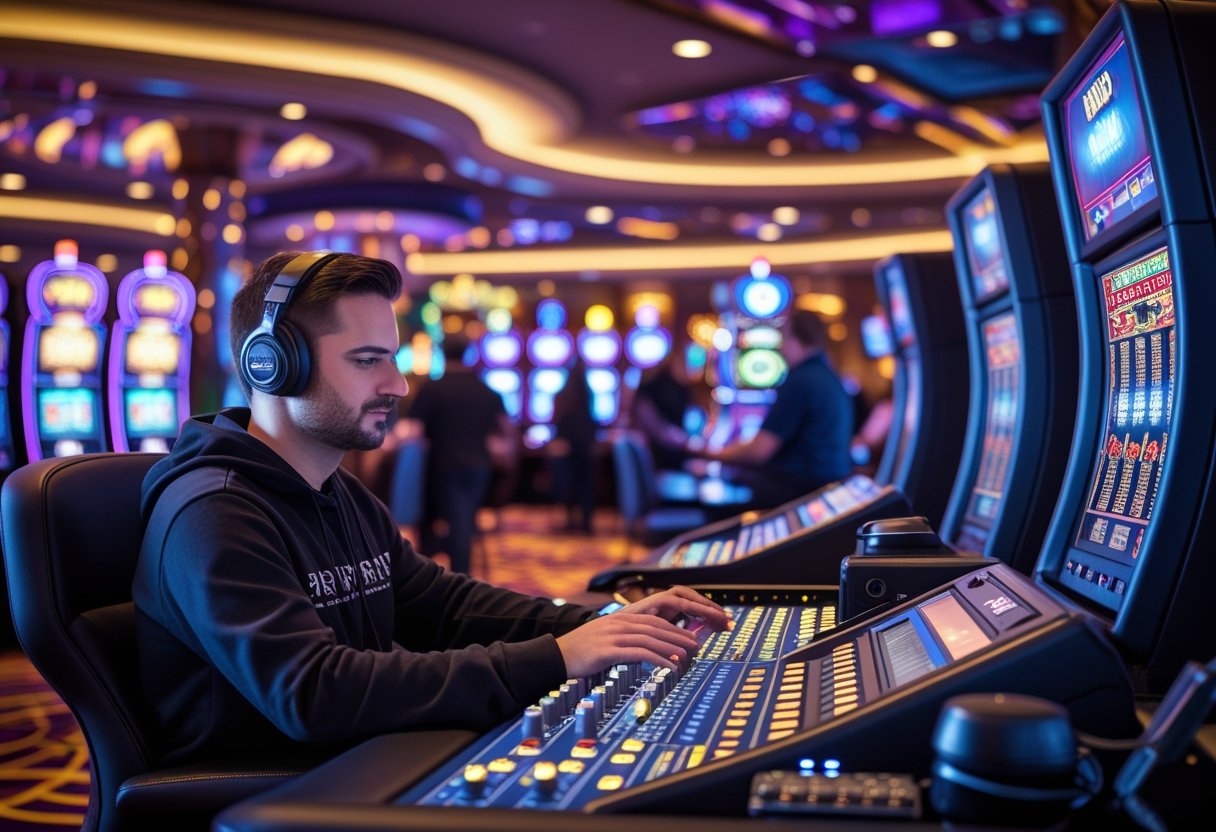
Elements of Casino Soundscapes
Casino soundscapes rely on three core components that work together to create an engaging environment. Background music sets the mood and energy level, while slot machine sound effects trigger psychological responses that encourage continued play.
Background Music Selection and Curation
Casino music follows specific patterns designed to influence player behavior. Most casinos use instrumental tracks without lyrics to avoid distracting players from games.
The tempo typically ranges from 72 to 108 beats per minute. This matches a relaxed heart rate and keeps players comfortable for extended periods.
Volume levels stay between 55-65 decibels during peak hours. This allows conversation while maintaining ambient energy.
Music selection varies by casino area:
- Slot machine floors: Upbeat electronic and pop instrumentals
- Table games: Jazz, classical, and smooth contemporary tracks
- High-limit areas: Sophisticated classical and ambient music
- Sports betting: Energetic rock and electronic music
Casinos update playlists every 2-4 weeks. They track which songs correlate with longer play sessions and higher spending.
Many venues use dynamic audio systems that adjust music based on crowd size and time of day. Louder, faster music plays during busy evening hours.
Sound Effects in Slot Machines
Slot machine sounds trigger specific psychological responses that keep players engaged. Winning sounds use major musical scales and higher frequencies to create excitement.
The classic “ding-ding-ding” of coins remains popular even in digital machines. These sounds activate the brain’s reward center and create anticipation for the next spin.
Near-miss sounds play when symbols almost align for a win. These audio cues make losses feel like close victories and encourage continued play.
Modern slots use layered audio design:
- Base ambient sounds during regular play
- Escalating music during bonus rounds
- Celebratory fanfares for jackpots
- Subtle feedback sounds for button presses
Volume varies by machine type. Penny slots often play louder sounds to attract attention, while high-limit machines use more subdued audio.
Frequency patterns in slot sounds typically range from 1000-4000 Hz. This range cuts through background noise and grabs player attention effectively.
Acoustic Design and Noise Control
Casino acoustic design balances energy with comfort through careful sound management. Carpet and soft furnishings absorb excess noise while maintaining lively atmosphere.
Ceiling height affects sound distribution. Most gaming floors feature 10-14 foot ceilings that prevent sound from becoming overwhelming while maintaining energy.
Sound masking systems use white noise and ambient sounds to cover unwanted noises. These systems ensure slot machine sounds don’t interfere with table games.
Casinos install acoustic barriers between different gaming areas. These invisible boundaries help separate the sounds of slots from poker rooms or sports betting areas.
HVAC noise control removes distracting mechanical sounds. Proper ventilation design ensures air systems don’t compete with intentional audio elements.
Sound engineers measure reverberation times throughout gaming floors. Optimal levels range from 1.2-1.8 seconds to maintain clarity without creating echo problems.
Technological Innovations in Casino Audio
Modern casinos use advanced digital sound systems that control audio across different zones with precision. Three-dimensional audio creates realistic environments while interactive systems respond to player actions in real-time.
Digital Sound Systems and Integration
Digital audio platforms have replaced traditional sound equipment in most modern casinos. These systems allow operators to control volume, timing, and distribution across multiple gaming areas from a central location.
Advanced control features include:
- Zone-specific audio management
- Real-time volume adjustments
- Automated scheduling systems
- Remote monitoring capabilities
Integration with other casino technologies creates seamless experiences. Sound systems now connect with lighting, climate control, and security networks through unified platforms.
Casinos can adjust audio settings based on time of day or crowd levels. Peak hours might feature more energetic soundtracks while quieter periods use ambient background music.
The technology reduces maintenance costs compared to analog systems. Digital platforms also provide detailed analytics about sound performance across different casino areas.
3D Audio and Spatial Effects
Spatial audio technology creates immersive sound environments that surround players from multiple directions. Directional speakers target specific gaming zones without affecting nearby areas.
Modern casinos use audio mapping to design sound landscapes. Slot machine areas might feature upbeat music while poker rooms maintain quieter atmospheric sounds.
Three-dimensional audio systems track player movement and adjust sound accordingly. Players hear different audio elements as they move through various casino sections.
Key spatial audio benefits:
- Reduced noise bleeding between areas
- Enhanced player focus
- Improved comfort levels
- Better acoustic separation
Advanced systems use ceiling-mounted speaker arrays that create audio bubbles around gaming tables. This technology ensures conversations at poker tables remain private while maintaining ambient casino sounds.
Interactive Audio Experiences
Interactive audio systems respond to player actions and game events in real-time. Slot machines now feature dynamic soundtracks that change based on gameplay patterns and winning streaks.
Personalized audio experiences adapt to individual player preferences. Some systems learn from player behavior and adjust music genres or volume levels automatically.
Interactive features include:
- Win celebration sounds
- Progressive audio rewards
- Personalized music selection
- Voice-activated controls
Augmented reality audio overlays provide additional information through headphones or speakers. Players can access game tutorials or receive audio notifications about promotions.
Mobile app integration allows players to customize their audio environment. They can select preferred sound themes or connect personal devices to compatible gaming machines.
These systems collect data about player audio preferences to improve future experiences. Casinos use this information to optimize sound design for different demographic groups.
Legal and Ethical Considerations in Casino Audio Design
Casino sound design operates within strict regulatory frameworks while raising important questions about player manipulation. Gaming authorities increasingly scrutinize audio tactics that may exploit vulnerable individuals or encourage excessive gambling behaviors.
Regulations on Audio Usage in Gambling Venues
Gaming commissions across different jurisdictions impose specific rules on casino audio systems. Volume limits typically range from 75-85 decibels in most gaming areas to prevent hearing damage and noise complaints from nearby communities.
The Nevada Gaming Control Board requires casinos to maintain sound levels that don’t interfere with security operations. Staff must be able to hear emergency announcements and communicate effectively during incidents.
Content restrictions apply to audio choices in many regions. Some states prohibit music with lyrics that reference gambling, winning, or money during peak hours. Others ban certain genres associated with risk-taking behaviors.
Time-based regulations control when casinos can use specific audio techniques. Many jurisdictions restrict the use of celebratory sounds and jackpot audio cues during late-night hours to minimize community disturbances.
Documentation requirements force casinos to maintain records of their audio programming. Regulators can audit these records during compliance inspections to ensure venues follow approved sound design protocols.
Responsible Sound Design for Player Wellbeing
Casino designers face growing pressure to create audio environments that don’t exploit problem gamblers. Responsible gaming advocates push for sound design that avoids psychological manipulation tactics.
Industry guidelines now discourage the use of near-miss audio cues that make losses sound like wins. These deceptive sounds can trigger continued play even when players are losing money consistently.
Volume cycling practices that gradually increase sound levels to mask time passage are becoming less acceptable. Some operators now implement audio reminders that help players track their gaming sessions.
Modern casino sound systems include features that support responsible gambling initiatives. These may include audio break reminders or systems that can reduce stimulating sounds for players who request calmer environments.
Game developers increasingly consider addiction potential when designing slot machine audio. They avoid sounds that create false excitement or mask the reality of financial losses during gameplay.
Sound Design for Online and Virtual Casinos
Online casinos face unique challenges in recreating the audio atmosphere of physical gambling venues. Digital platforms use specialized audio techniques and immersive soundscapes to engage players through their devices.
Adapting Audio for Digital Gambling Platforms
Online casinos must overcome significant technical limitations when delivering audio experiences. Device speakers and headphones cannot replicate the full acoustic environment of a casino floor.
Audio Compression and Streaming present major challenges. Game developers compress sound files to reduce loading times and bandwidth usage. This process often removes subtle audio details that create atmosphere in physical casinos.
Most online platforms use adaptive audio systems that adjust sound quality based on internet connection speed. Players with slower connections receive lower-quality audio to prevent gameplay interruptions.
Cross-Platform Compatibility requires careful consideration. Sound designers create audio that works across desktop computers, tablets, and smartphones. Each device has different speaker capabilities and processing power.
Online slots use layered audio tracks to build excitement. Base music plays continuously while sound effects trigger during spins and wins. This approach mimics the layered soundscape of physical slot machines.
Custom Audio Themes help online casinos establish brand identity. Some platforms partner with independent musicians to create original soundtracks. These unique audio signatures help differentiate one casino from competitors.
Creating Immersive Experiences in Virtual Environments
Virtual casino environments rely heavily on 3D spatial audio to create realistic experiences. This technology positions sounds in virtual space, making chip clicks seem to come from specific table locations.
Ambient Sound Layers recreate casino floor atmosphere digitally. Developers combine multiple audio tracks including:
- Background chatter and conversation
- Distant slot machine sounds
- Card shuffling and chip handling
- Footsteps and general movement
Real-Time Audio Processing adapts sounds based on player actions. Volume levels change as players move through virtual casino spaces. Sounds become clearer when approaching specific games or tables.
Interactive Audio Elements respond to user interface interactions. Button clicks, menu selections, and game transitions all feature distinct sound signatures. These audio cues provide feedback and guide player navigation.
Voice Integration adds human elements to virtual experiences. Some platforms include dealer voices and player reactions. This audio content creates social connection in otherwise isolated digital environments.
Binaural Audio Recording captures realistic casino soundscapes. Developers record actual casino environments using specialized microphones. These recordings provide authentic background audio for virtual platforms.