Online casinos rely heavily on visual design to attract and keep players engaged. Every color, animation, and button placement is carefully chosen to create an experience that feels exciting and easy to use. Digital art and UI/UX design work together to shape how players interact with gambling platforms, directly affecting whether someone stays on a site or leaves within minutes.
The success of modern casino platforms depends on more than just games and odds. Players now expect smooth navigation, appealing graphics, and interfaces that work well on phones and computers. Casino operators invest heavily in visual design because they know it impacts player behavior and business results.
This blend of artistic creativity and user experience design covers many areas, from mobile-friendly layouts to the psychology behind color choices. The industry continues to evolve as new technologies emerge and regulations change, making design choices even more important for casino platforms competing for players’ attention.
The Role of Digital Art in Online Casinos
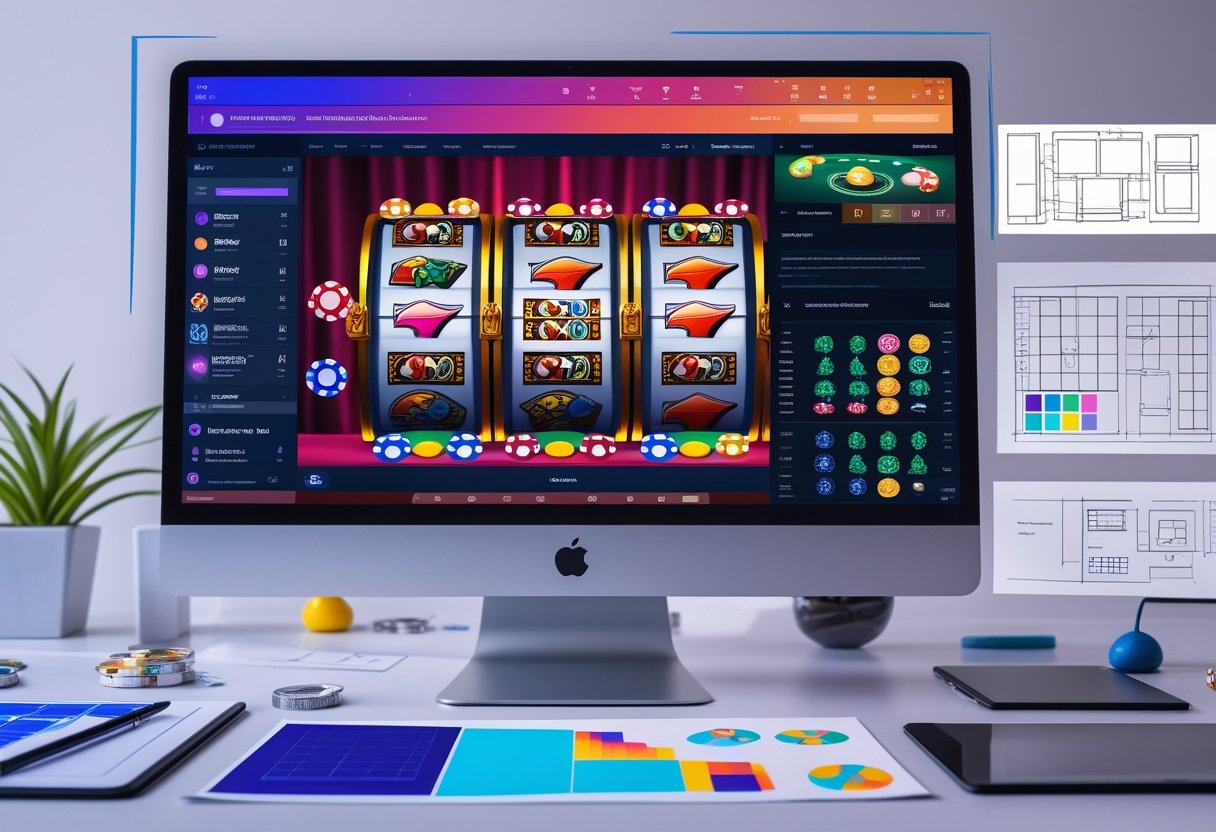
Digital art serves as the visual foundation for modern online casinos, creating immersive environments that attract players and establish brand recognition. These visual elements have evolved from simple graphics to sophisticated artistic experiences that define game themes and casino identity.
Evolution of Casino Visuals
Early online casinos used basic graphics with limited color palettes and simple animations. These primitive designs focused only on functionality rather than visual appeal.
Modern casino platforms now feature high-definition artwork with detailed textures and smooth animations. Artists create complex visual systems that respond to player actions in real-time.
Digital art techniques have advanced to include 3D modeling and particle effects. These tools allow designers to build realistic casino environments that rival physical locations.
The shift toward mobile gaming pushed artists to optimize visuals for smaller screens. This challenge led to cleaner designs with bolder colors and simplified elements that work across all devices.
Brand Identity Through Visual Elements
Casino operators use specific color schemes and artistic styles to create memorable brand experiences. Red and gold combinations often signal luxury, while blue tones suggest trust and reliability.
Logo design incorporates artistic elements that appear throughout the platform. These consistent visual markers help players recognize the brand instantly across different games and promotional materials.
Typography choices reflect the casino’s personality through custom fonts and decorative text elements. Elegant script fonts suggest sophistication, while bold sans-serif options convey modern energy.
Visual consistency across all platform elements builds player confidence. When artwork maintains the same style from the homepage to individual games, users feel more comfortable navigating the site.
Artwork Themes Aligned With Casino Games
Slot games feature diverse artistic themes ranging from ancient civilizations to futuristic worlds. Each theme requires unique visual elements including background art, symbol designs, and animation styles.
Card game interfaces use classical design elements with clean layouts and traditional color schemes. Artists balance functionality with aesthetic appeal to maintain focus on gameplay.
Themed game collections often share visual DNA through consistent artistic approaches. A casino’s Egyptian-themed games might all use similar gold accents, hieroglyphic patterns, and desert color palettes.
Seasonal artwork updates keep visual content fresh and engaging. Holiday themes, special events, and promotional periods receive custom artistic treatments that enhance the gaming experience.
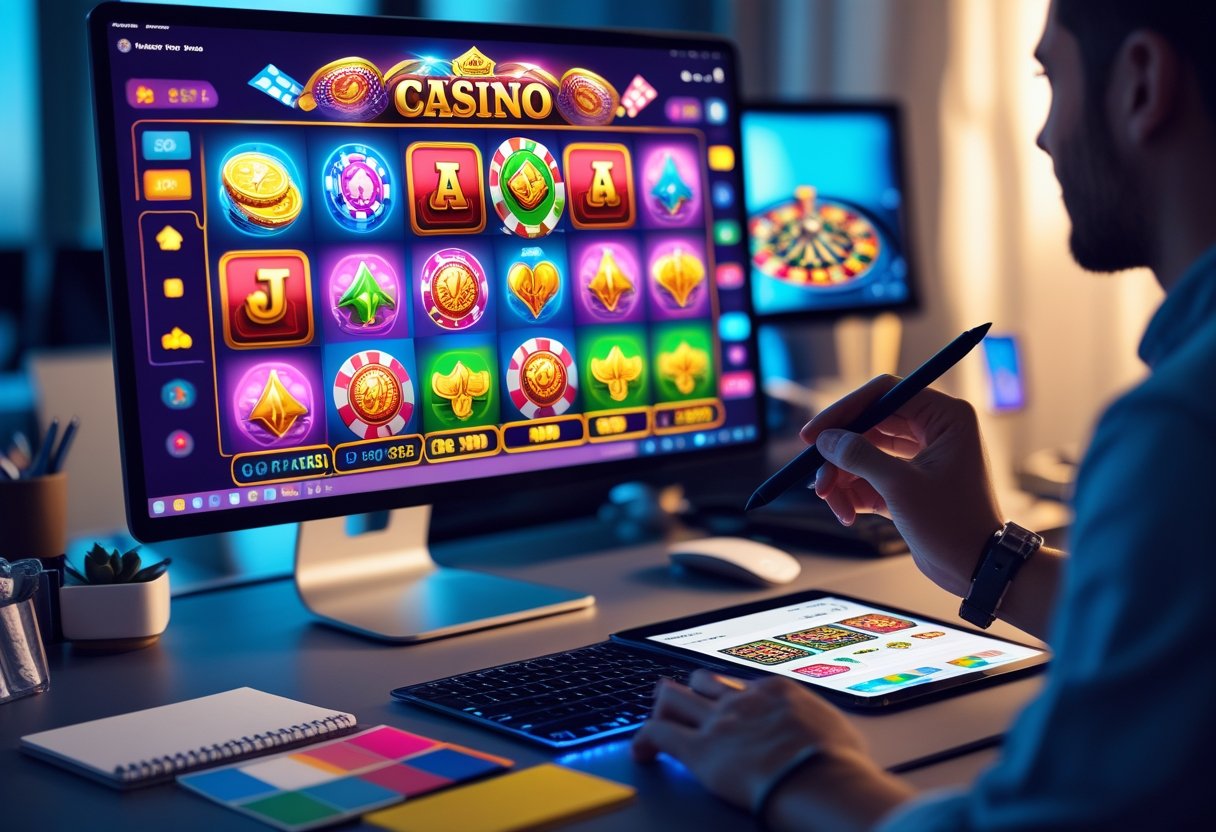
Essential UI/UX Principles for Online Gambling Platforms
Online gambling platforms require specific design principles that prioritize user trust, seamless navigation, and regulatory compliance. These principles focus on creating intuitive experiences that guide users effectively while meeting accessibility standards.
User-Centered Design Approaches
User-centered design places the player’s needs at the core of every design decision. This approach involves understanding player behavior patterns and preferences through research and testing.
Player Journey Mapping helps designers identify key touchpoints. These include registration, deposit processes, game selection, and withdrawal procedures. Each step must be streamlined to reduce friction.
Persona Development guides design choices by creating profiles of typical users. Different player types have varying experience levels and preferences. Casual players need simpler interfaces while experienced gamblers prefer advanced features.
Usability Testing reveals pain points in real-time. Regular testing with actual users uncovers issues that designers might miss. This feedback drives continuous improvements to the platform.
Mobile-First Design acknowledges that most users access platforms via smartphones. Touch-friendly buttons, simplified menus, and fast loading times become essential. The interface must work seamlessly across all screen sizes.
Navigation and Information Architecture
Clear navigation structures help users find games and features quickly. Poor navigation leads to user frustration and abandoned sessions.
Information Hierarchy organizes content by importance. Game categories appear prominently while secondary features like settings remain accessible but unobtrusive. This reduces cognitive load on users.
Search Functionality enables quick game discovery. Advanced filters help users sort by provider, theme, or payout rates. Auto-complete suggestions speed up the process further.
Breadcrumb Navigation shows users their current location within the platform. This becomes crucial in complex sites with multiple game categories and promotional sections.
Consistent Layout Patterns create familiarity across pages. Standard placement of logos, menus, and action buttons reduces learning time. Users can navigate intuitively without constant reorientation.
Accessibility Compliance and Best Practices
Accessibility ensures all users can access gambling platforms regardless of physical abilities or technical limitations. Legal requirements in many jurisdictions make this mandatory.
Color Contrast Standards help users with visual impairments read text clearly. WCAG 2.1 guidelines specify minimum contrast ratios for text and background combinations.
Keyboard Navigation allows users to access all features without a mouse. Tab order must follow logical sequences through menus and game selections.
Screen Reader Compatibility requires proper HTML structure and alt text for images. Game titles, buttons, and promotional content need descriptive labels that assistive technology can interpret.
Text Size Options accommodate users with varying vision capabilities. Scalable fonts and zoom functionality ensure content remains readable at larger sizes without breaking layouts.
Synergy Between Digital Art and UI/UX Design
Digital art and UI/UX design create powerful combinations in online casino platforms through visual storytelling, integrated workflows, and careful balance between creative expression and functional usability.
Visual Storytelling to Enhance Engagement
Digital art transforms static casino interfaces into dynamic storytelling platforms. Artists create themed environments that transport players into specific worlds, such as ancient Egypt for slot games or luxurious Monte Carlo settings for poker tables.
Key storytelling elements include:
- Character animations that react to player actions
- Progressive visual narratives that unfold during gameplay
- Environmental details that reinforce game themes
- Color palettes that evoke specific emotions
UI designers integrate these artistic elements seamlessly into functional interfaces. They ensure that decorative animations never interfere with critical buttons or information displays. The art supports the user experience rather than competing with it.
Successful visual storytelling maintains player interest during longer gaming sessions. Casinos use animated backgrounds, character interactions, and evolving visual themes to create emotional connections. These elements encourage players to explore different games and return to the platform regularly.
Integrated Design Processes
Modern casino development teams combine artistic vision with user experience planning from project start. Digital artists work alongside UX researchers to understand player behavior patterns and preferences before creating visual assets.
The integrated workflow typically follows these stages:
- Research Phase – UX teams identify user needs and pain points
- Concept Development – Artists create visual concepts based on user data
- Prototype Testing – Teams test art integration with interface functionality
- Iteration Cycles – Both disciplines refine their work based on user feedback
Artists receive detailed specifications about button sizes, text readability requirements, and interaction zones. UX designers gain early access to visual concepts to plan optimal placement and functionality.
This collaboration prevents common problems like beautiful artwork that hides important interface elements. Teams catch potential issues before development, saving time and resources while creating better player experiences.
Balancing Creativity With Usability
Casino platforms must balance artistic appeal with clear, functional interfaces that support responsible gambling practices. Digital artists work within strict usability constraints while maintaining visual excitement and brand identity.
Critical balance points include:
| Creative Element | Usability Requirement |
|---|---|
| Animated backgrounds | Clear text readability |
| Decorative borders | Accessible button sizing |
| Particle effects | Performance optimization |
| Color gradients | Contrast compliance |
Artists learn to create impactful visuals within technical limitations. They design assets that scale properly across different screen sizes and maintain visual quality during fast
Impact of Visual Design on Player Retention
Visual design creates emotional connections that keep players engaged with online casino platforms. Personalized interfaces adapt to individual preferences, making each gaming session feel unique and tailored.
Emotional Responses to Visual Stimuli
Color schemes trigger specific psychological reactions in casino players. Red and gold create excitement and luxury feelings. Blue and green promote trust and calmness.
Typography choices affect how players perceive game quality. Clean, readable fonts suggest professionalism. Decorative fonts can create themed atmospheres for specific games.
Visual animations provide instant feedback during gameplay. Spinning reels, flashing lights, and particle effects create anticipation moments. These micro-interactions keep players focused on the screen.
Symbol clarity directly impacts player understanding. Well-designed icons reduce confusion about game mechanics. Players stay engaged when they clearly understand winning combinations and bonus features.
Loading animations prevent player frustration during transitions. Smooth visual transitions between game states maintain the gaming flow. Poor visual feedback often leads to immediate player departure.
Personalization and Adaptive Interfaces
Modern casino platforms track individual player preferences through visual choices. The system learns which color themes, game layouts, and animation speeds each player prefers.
Adaptive interfaces change based on player behavior patterns. Frequent slot players see different dashboard layouts than poker enthusiasts. This targeted approach increases session duration.
Profile customization options let players control their visual experience. Dashboard themes, notification styles, and game display preferences create ownership feelings.
Smart algorithms suggest games based on previous visual preferences. Players who choose colorful, animated slots receive similar recommendations. This visual matching improves game discovery rates.
Mobile interfaces automatically adjust visual elements for different screen sizes. Touch targets become larger. Animations reduce to save battery life. These adaptations keep players engaged across all devices.
Mobile UI/UX Design Trends in Online Casinos
Mobile casino platforms now prioritize touch-first interfaces and flexible layouts that adapt to different screen sizes. These design approaches focus on creating smooth gameplay experiences across smartphones and tablets.
Responsive and Adaptive Layouts
Casino websites use responsive design to automatically adjust to different screen sizes. The layout changes based on whether players use phones, tablets, or desktop computers.
Grid-based systems help organize game thumbnails and menu items. These grids stack vertically on phones and spread horizontally on larger screens.
Most casino sites now use mobile-first design. Designers create the mobile version first, then add features for bigger screens. This approach ensures the core experience works well on phones.
Navigation menus collapse into hamburger icons on mobile devices. This saves screen space for games and betting options. Players can still access all features with simple taps.
Card-based layouts work well for displaying different games. Each game gets its own card that shows the title, image, and key details. These cards resize automatically for different screens.
Casino apps often use adaptive layouts that change based on device orientation. Portrait mode shows single-column layouts, while landscape mode displays multiple columns for easier browsing.
Touch-Optimized Interactions
Mobile casino interfaces design buttons and controls for finger taps instead of mouse clicks. Touch targets need to be large enough for accurate tapping.
Minimum button sizes follow the 44-pixel rule for touch targets. This prevents accidental taps and makes navigation easier for players with different finger sizes.
Swipe gestures replace traditional scrolling in many casino apps. Players swipe left and right to browse games or view different betting options. These gestures feel natural on touchscreens.
Pull-to-refresh actions let players update game lists or reload their account balance. This gesture works the same way as social media apps that players already know.
Casino games use haptic feedback to confirm button presses and important actions. The phone vibrates slightly when players place bets or spin reels.
Long-press menus reveal additional options without cluttering the interface. Players can long-press game icons to see quick actions like adding favorites or viewing rules.
Gamification Elements in Digital Casino Design
Casino designers use game-like features to keep players engaged and motivated. These elements include achievement systems that track player progress and reward systems built into the visual interface.
Achievement Badges and Progress Indicators
Achievement badges serve as visual rewards that players earn by completing specific actions. Players might unlock a “High Roller” badge after placing large bets or a “Lucky Streak” badge for consecutive wins.
Progress indicators show players how close they are to reaching their next goal. These appear as progress bars, experience meters, or level displays. A player might see they need three more spins to unlock a bonus round.
Visual design plays a key role in making these elements effective:
- Color schemes that match the casino’s brand
- Animation effects when badges are earned
- Clear typography for progress labels
These features tap into players’ desire to collect rewards and reach new milestones. The visual feedback creates a sense of accomplishment beyond just winning money.
Reward Systems Integrated With UI
Reward systems blend directly into the casino’s visual interface. Points appear as floating animations when earned. Leaderboards display player rankings in real-time during gameplay.
Common reward system elements include:
- Daily login bonuses with countdown timers
- Loyalty points that accumulate with each bet
- VIP status indicators with exclusive perks
- Bonus wheel spins as visual rewards
The interface makes these rewards feel immediate and tangible. Players see their points increase with smooth animations. Status upgrades trigger celebratory visual effects.
Designers place reward information where players can easily see it. Point totals display in the top corner. Progress bars appear below game screens. This constant visibility keeps players aware of their potential rewards.
Future Innovations in Digital Art for Online Casinos
Casino platforms are integrating cutting-edge visual technologies that blend artistic creativity with advanced computing power. These innovations focus on creating responsive environments and automated content generation that adapts to individual player preferences.
Immersive Visuals With AR/VR
Augmented reality transforms traditional casino interfaces by overlaying digital elements onto real-world environments. Players can place virtual slot machines on their coffee tables or interact with 3D card dealers in their living rooms.
Virtual reality creates completely immersive casino environments that respond to player movements and gestures. These digital spaces feature photorealistic lighting, dynamic weather systems, and interactive architectural elements that change based on game outcomes.
Key AR/VR Features:
- Hand tracking for natural card manipulation
- Spatial audio that mimics real casino acoustics
- Haptic feedback for tactile sensations
- Eye tracking for intuitive menu navigation
Artists design these virtual spaces using volumetric capture technology to record real dealers and environments. This creates authentic experiences that blend physical and digital elements seamlessly.
The technology allows multiple players to share the same virtual space. They can see each other’s avatars and interact through voice chat and gesture recognition.
AI-Generated Graphics and Animations
Artificial intelligence creates personalized visual content that adapts to individual playing styles and preferences. Machine learning algorithms analyze player behavior to generate custom slot symbols, background themes, and character designs in real-time.
Procedural generation produces unlimited variations of game environments without human intervention. AI systems create new casino floor layouts, decorative elements, and atmospheric effects that never repeat exactly.
Neural networks trained on thousands of artistic styles can instantly transform casino interfaces to match player preferences. A player who enjoys Art Deco aesthetics receives automatically generated graphics in that style across all games.
AI Art Applications:
- Dynamic symbol creation for slot games
- Personalized avatar generation
- Adaptive color schemes based on mood
- Real-time texture modifications
These systems reduce development costs while providing infinite visual variety. Artists work alongside AI tools to establish style guidelines and quality standards for automated content generation.
Regulatory and Ethical Considerations in Casino UI/UX Design
Casino UI/UX designers must balance visual communication that clearly shows odds and payouts while avoiding interface tricks that exploit user psychology. These standards protect players from predatory design patterns that could lead to problem gambling.
Fairness in Visual Communication
Casino interfaces must display odds and house edges in clear, readable formats. Many jurisdictions require this information to be visible without requiring users to dig through menus or settings.
Required transparency elements include:
- Return to player (RTP) percentages
- Minimum and maximum bet limits
- Game rules and payout structures
- Terms and conditions for bonuses
Colors and typography play key roles in fair communication. Red text for losses and green for wins creates clear visual distinctions. Font sizes must be large enough for easy reading across all devices.
Misleading visual cues violate regulatory standards in most markets. This includes false progress bars that suggest near-wins or animations that make losses appear like victories.
Time displays and session tracking help users understand their gambling duration. Some regions mandate these features to promote responsible gaming awareness.
Preventing Manipulative Interface Patterns
Dark patterns in casino design can exploit psychological vulnerabilities and create addiction risks. Regulatory bodies increasingly target these manipulative techniques through specific design restrictions.
Prohibited manipulative patterns include:
- Disguised advertisements that look like game content
- Roach motels that make account closure difficult
- Urgency tactics with fake countdown timers
- Hidden costs buried in complex bonus terms
Auto-play features require careful implementation with mandatory break intervals. Many jurisdictions limit consecutive auto-play spins or require user confirmation after set periods.
Pop-up notifications about losses or spending limits must not include immediate options to increase deposit limits. Cool-down periods prevent impulsive decisions during emotional moments.
Interface elements cannot simulate skill-based outcomes in chance-based games. This prevents false beliefs about player control over random number generation systems.