Casinos carefully design every aspect of their environments to create specific experiences for visitors. Among the most powerful tools at their disposal are colour and lighting, which work together to influence mood, behavior, and decision-making. These elements are not chosen by chance but are strategically selected based on psychological research and industry expertise.
Casino designers use specific colours and lighting techniques to keep players engaged longer and encourage continued gambling. Red hues create excitement and urgency, while softer blues and greens can provide moments of calm. Lighting eliminates natural time cues by avoiding windows and clocks, making hours pass without notice.
The science behind these design choices extends far beyond basic decoration. Casinos consider how different zones require different approaches, from the energetic atmosphere around slot machines to the more sophisticated ambiance of high-stakes gaming areas. Modern technology has also introduced new possibilities, while cultural factors influence how these strategies are applied across different regions and player demographics.
Psychological Influence of Colour in Casinos
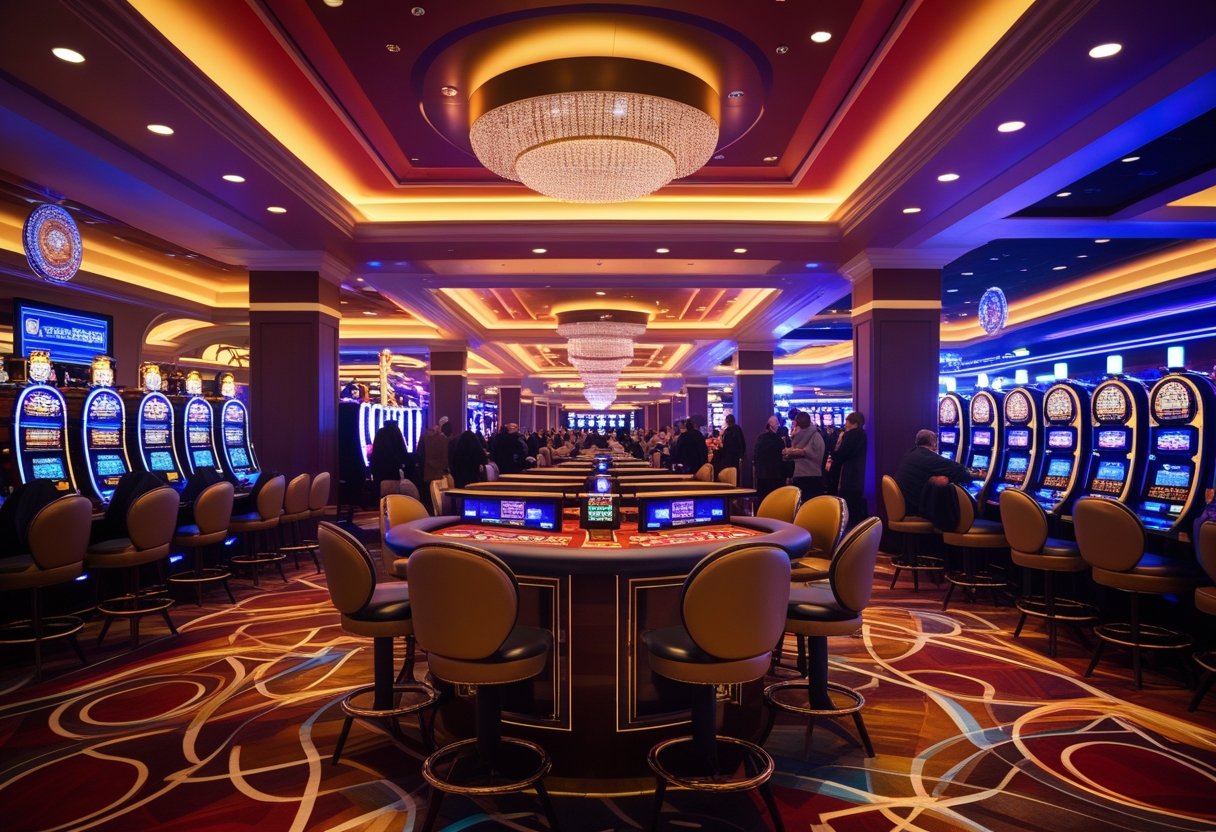
Colors directly affect players’ brain chemistry and decision-making processes in gambling environments. Casino designers use specific color combinations to trigger emotions like excitement, comfort, and urgency while keeping players engaged for longer periods.
Impact on Player Emotions
Red stimulates the nervous system and increases heart rate. This creates feelings of excitement and urgency in players. Casinos place red colors near slot machines and high-stakes tables to encourage quick decisions.
Blue produces calming effects that help players stay relaxed during long gaming sessions. It reduces stress hormones like cortisol. Many casinos use blue in seating areas and around poker tables where players need to think clearly.
Green connects to money and luck in players’ minds. It also has a soothing effect that keeps people comfortable. Card tables traditionally use green felt because it reduces eye strain and maintains focus.
Yellow grabs attention and creates optimism. Casinos use bright yellow for jackpot signs and promotional displays. This color makes winnings appear more attractive and exciting.
Purple suggests luxury and high value. VIP areas often feature purple accents to make elite players feel special and important.
Colour Choices for Stimulating Play
Bright, saturated colors increase arousal levels in the brain. Casinos combine red, orange, and gold to create energy and excitement. These colors make the environment feel alive and dynamic.
Neon colors grab attention quickly. Pink and electric blue neon signs draw players to specific games. The bright lights trigger dopamine release, which creates pleasure sensations.
Contrasting color pairs create visual tension. Black and gold combinations suggest sophistication while maintaining excitement. Red and black evoke classic casino imagery that players expect.
| Color | Effect | Common Usage |
|---|---|---|
| Red | Increases urgency | Slot machine accents |
| Orange | Boosts energy | Gaming floor lighting |
| Gold | Suggests wealth | Jackpot displays |
| Neon Pink | Grabs attention | Promotional signs |
Dark backgrounds make bright colors pop more. This contrast keeps players focused on games rather than exits or clocks.
Effects of Warm and Cool Tones
Warm tones like red, orange, and yellow speed up time perception. Players feel energized but lose track of how long they have been playing. These colors increase betting frequency and risk-taking behavior.
Warm colors also raise body temperature slightly. This physical response creates comfort in air-conditioned casino environments. Players stay longer without feeling cold or uncomfortable.
Cool tones such as blue and green slow down perceived time. They help players feel relaxed and in control. Casinos use cool colors in areas where they want thoughtful decision-making.
Blue light reduces melatonin production. This keeps players alert even during late hours. Many casinos incorporate blue LED lighting to prevent drowsiness.
Cool colors lower blood pressure and heart rate. This creates a sense of calm that encourages longer play sessions. Players make more calculated bets rather than impulsive decisions.
The temperature of lighting affects color perception. Warm white light makes reds appear more intense. Cool white light enhances blues and greens for maximum psychological impact.
Strategic Use of Lighting in Casino Design
Casino designers use lighting as a powerful tool to control player experiences and maximize revenue. They carefully plan light placement, intensity, and color to guide behavior and create specific moods throughout gaming spaces.
Creating Atmosphere with Lighting
Casinos use strategic lighting combinations to build immersive environments that keep players engaged. Bright, colorful lights around slot machines create excitement and energy. These lights flash and change colors to signal wins and near-misses.
Gaming areas feature different lighting zones for specific purposes. High-stakes poker rooms use softer, more intimate lighting to create exclusive atmospheres. Main casino floors employ brighter lighting to maintain alertness and activity levels.
Themed lighting designs help create unique experiences in different casino sections. Asian-themed areas might use red and gold lighting to match cultural expectations. Sports betting areas often feature cooler blue and white lights to suggest precision and analysis.
Casinos avoid harsh fluorescent lighting that might remind players of office environments. Instead, they use warm LED systems that can be adjusted throughout the day. This creates a comfortable environment where time seems to stand still.
Influence on Guest Behavior
Lighting directly affects how players make gambling decisions. Warm lighting makes people feel relaxed and more likely to stay longer. Bright lights around gaming machines draw attention and encourage play.
Casinos use lighting to guide player movement through gaming floors. Brighter pathways lead to high-profit games and amenities. Dimmer transition zones slow down movement and encourage exploration of gaming areas.
Color temperature plays a key role in player psychology. Red lights create urgency and excitement during gameplay. Golden lighting suggests luxury and wealth, making players feel special about their experience.
Strategic lighting placement highlights jackpot displays and promotional signage. This draws player attention to games with higher profit margins. Flashing lights and movement effects create visual excitement that stimulates gambling behavior.
Balancing Ambient and Task Lighting
Casino designers must balance general room lighting with focused game lighting. Ambient lighting provides overall illumination without being too bright or dim. Task lighting ensures players can clearly see cards, chips, and game displays.
Gaming tables require specific lighting angles to eliminate shadows on playing surfaces. Overhead fixtures provide even coverage across card games and roulette tables. Side lighting prevents glare on chips and betting areas.
LED technology allows casinos to adjust lighting levels throughout operating hours. Early evening lighting is brighter to welcome arriving guests. Late-night lighting becomes softer to maintain comfortable playing conditions.
Sound and lighting work together to create complete sensory experiences. Upbeat music paired with dynamic lighting increases player energy levels. Quieter areas use steady, warm lighting to promote longer gaming sessions.
Interaction Between Colour and Lighting
Colour and lighting work together to create powerful effects on player behavior and casino operations. Red lighting increases heart rate and excitement while blue tones promote calmer decision-making, and strategic combinations guide visitors through different gaming areas.
Enhancing Mood Through Combined Effects
Red and gold lighting creates the most stimulating environment for gaming areas. These warm colors paired with bright lights increase heart rate and energy levels. The combination makes players feel more excited and willing to take risks.
Blue-enriched lighting produces different effects on gambling behavior. Research shows that 6500K blue lighting changes how people view losses and gains. This cooler light makes players think differently about their bets.
Warm ambient lighting keeps players comfortable for longer periods. Casinos use soft yellow and orange tones in seating areas around slot machines. This approach reduces eye strain while maintaining engagement.
Color temperature affects decision-making patterns. Warmer lights (3000K-4000K) encourage social interaction and relaxation. Cooler lights (5000K-6500K) increase alertness but may reduce playing time.
Visual Comfort and Perception
Proper color and lighting combinations prevent visual fatigue. Soft blue and green lighting in high-roller areas creates a calming atmosphere. These colors help wealthy players feel relaxed during long gaming sessions.
Contrast levels between colored lights and game displays matter greatly. Too much contrast causes eye strain and makes players leave sooner. Balanced lighting ratios keep visual comfort high.
Spotlights with colored gels draw attention to specific games. Casinos use red and yellow spotlights on profitable slot machines. The warm colors make these games appear more inviting than others.
Different areas need different lighting approaches:
- Gaming floors: Bright, warm colors
- Restaurants: Soft, neutral tones
- Bars: Dim, colorful accent lighting
- Cashier areas: Clear, white light
Guiding Visitor Flow
Lighting color changes create invisible pathways through casinos. Bright warm lights mark main gaming areas while cooler tones indicate transition spaces. This system guides visitors without obvious signs.
Color temperature shifts signal different zones. The gaming floor uses 3000K warm white lighting. Corridors and exits use 4000K neutral white light. This subtle difference encourages players to stay in gaming areas.
Sequential lighting patterns lead visitors toward profitable games. Casinos install warmer, brighter lights near high-revenue slot machines. Cooler, dimmer lights mark paths to exits and restrooms.
Online casinos copy these techniques with dynamic color schemes. Virtual platforms use flashing lights and changing colors. These effects recreate the visual flow patterns of physical casinos on computer screens.
Colour Schemes in Different Casino Zones
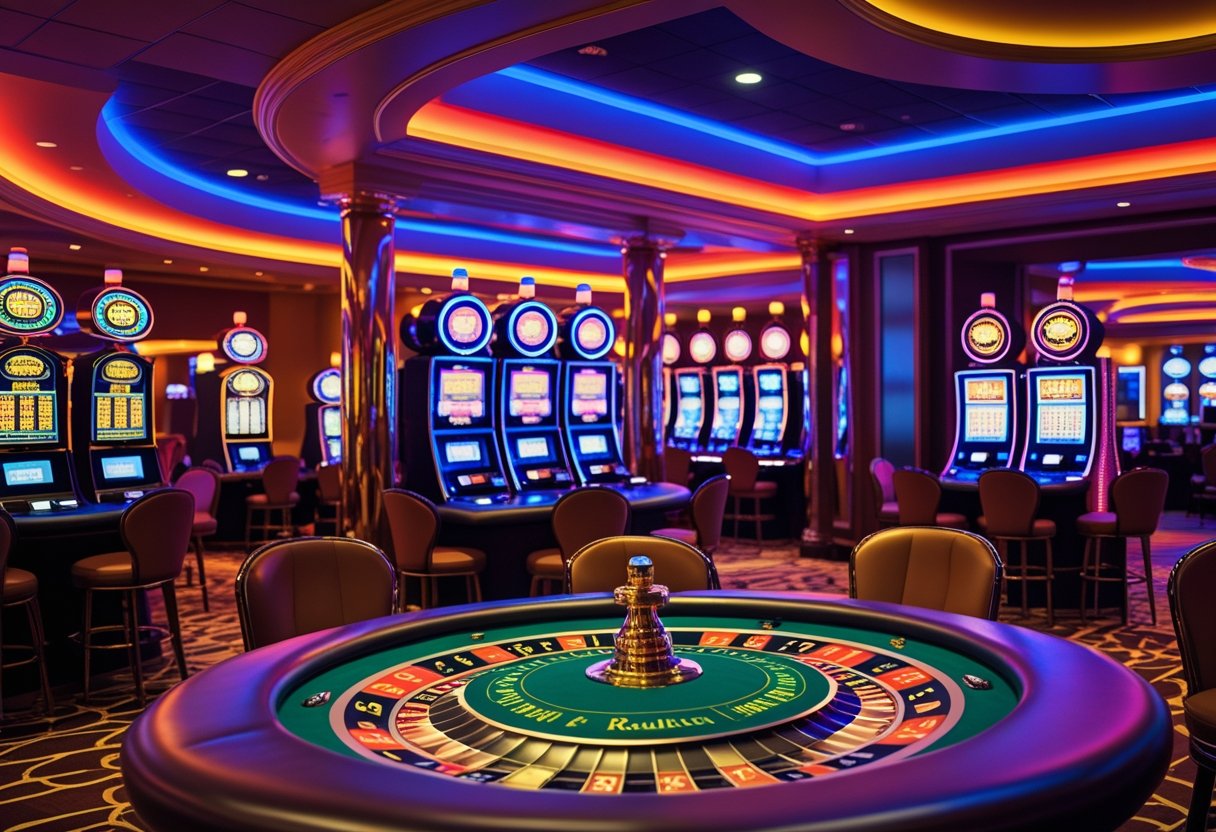
Casinos use specific color palettes for each area to create targeted emotional responses and behaviors. Entry areas feature warm yellows and muted reds to welcome guests, while gaming floors use energizing reds and golds to maintain excitement.
Gaming Floor Design
The main gaming floor uses high-energy colors to keep players alert and engaged. Red dominates slot machine areas because it creates excitement and urgency. This color makes time feel faster and encourages quick decisions.
Gold accents appear throughout gaming areas to suggest wealth and luxury. These metallic tones make players feel like big wins are possible. Bright lighting enhances these warm colors.
Purple and magenta often highlight premium slot machines. These colors signal higher-value games and attract players willing to spend more money.
Casino designers avoid blue and green on gaming floors. These colors are too calming and might make players want to leave sooner.
VIP and High-Stakes Areas
High-roller rooms use sophisticated color schemes that differ greatly from the main floor. Deep blues and rich greens create a calm, exclusive atmosphere. These colors help wealthy players feel relaxed during long gaming sessions.
Navy blue appears frequently in VIP areas because it suggests trust and stability. Rich burgundy and forest green add elegance without being too stimulating.
Gold and brass accents provide luxury touches without overwhelming the space. These metallic elements are more subtle than on the main gaming floor.
Lighting in VIP areas uses warmer temperatures to make the space feel intimate. This creates a private club atmosphere that high-stakes players expect.
Dining and Lounge Spaces
Restaurant and bar areas use colors that encourage longer visits and higher spending on food and drinks. Warm earth tones like browns and oranges stimulate appetite and create comfort.
Soft yellows appear in casual dining spaces because they promote conversation and relaxation. These colors help players take breaks without feeling rushed to return to gaming.
Blue tones work well in upscale restaurants and lounges. They create a sophisticated dining experience and help guests feel calm after intense gaming sessions.
Red accents in dining areas can increase appetite and encourage faster turnover during busy periods. However, too much red may make diners uncomfortable.
Lighting Techniques for Casino Environments
Modern casinos use three main lighting approaches to create specific atmospheres and influence player behavior. These techniques work together through specialized accent lighting, flexible systems that adapt to different times and activities, and carefully chosen light sources that maximize both visual appeal and operational efficiency.
Accent Lighting Applications
Accent lighting directs attention to specific gaming areas and creates visual interest throughout the casino floor. Spotlights highlight high-value slot machines and table games to draw players toward these revenue-generating areas.
Key accent lighting uses include:
- Highlighting jackpot displays and promotional signage
- Creating visual pathways between gaming zones
- Emphasizing architectural features like columns and ceiling designs
- Drawing focus to VIP gaming areas
Red and yellow accent lights increase excitement levels in players. These warm colors raise heart rates and encourage faster decision-making during games.
Blue and green accent lighting appears in relaxation areas like lounges and restaurants. These cooler tones help players feel calm between gaming sessions.
Casino designers place accent lights at different heights to create depth. Floor-level lights guide movement patterns. Mid-level lighting illuminates game displays. Overhead accent lights create ambient atmosphere without harsh shadows.
Dynamic and Adjustable Lighting
Adjustable lighting systems change throughout the day to maintain player engagement during different hours. These systems compensate for the lack of natural light in windowless casino environments.
Morning lighting uses brighter, cooler tones to energize early visitors. Afternoon settings maintain consistent illumination levels regardless of outside conditions. Evening lighting shifts to warmer, more intimate tones that encourage longer stays.
Dynamic lighting features:
- Automated dimming controls
- Color temperature adjustments
- Zone-specific programming
- Special event lighting modes
Gaming areas use faster light changes to match the pace of play. Slot machine zones feature rapid color shifts and flashing sequences. Table game areas maintain steadier lighting to support concentration and card visibility.
Some casinos program lighting to respond to crowd levels. Busier areas receive brighter, more stimulating light. Quieter zones get softer illumination to create intimate gaming experiences.
LED vs. Traditional Lighting
LED lighting has become the standard choice for modern casino installations due to energy efficiency and programming flexibility. Traditional incandescent and fluorescent lights still appear in some older establishments.
LED advantages:
- Energy costs: 75% less electricity usage than incandescent bulbs
- Color options: Millions of programmable color combinations
- Lifespan: 25,000+ hours compared to 1,000 hours for traditional bulbs
- Heat output: Minimal heat generation reduces cooling costs
LEDs allow instant color changes without replacing bulbs. Casino operators can shift from red excitement lighting to blue calming tones with simple programming adjustments.
Traditional lighting requires physical bulb changes for different colors. This creates maintenance challenges and limits design flexibility.
LEDs integrate with sound systems to create synchronized light and audio experiences. Slot machines use LED strips that pulse with winning sounds and music.
Heat reduction from LED systems improves player comfort. Traditional bulbs generate significant heat that requires additional air conditioning in crowded gaming areas.
Cultural and Regional Considerations in Casino Colour and Lighting
Different cultures view colors in unique ways. What brings good luck in one country may mean bad luck in another.
Red is a popular choice in Asian casinos. It represents good fortune and wealth in Chinese culture. Many casinos in Macau and Singapore use bright reds throughout their gaming floors.
Western casinos often prefer gold and burgundy combinations. These colors suggest luxury and sophistication to European and American players.
| Region | Preferred Colors | Cultural Meaning |
|---|---|---|
| Asia | Red, Gold | Luck, Prosperity |
| Europe | Blue, Silver | Trust, Elegance |
| Americas | Green, Gold | Money, Success |
Lighting intensity also varies by region. Asian casinos tend to use brighter lights. This matches the cultural preference for vibrant, energetic environments.
European casinos often choose softer lighting. They create a more refined atmosphere that appeals to local tastes.
Religious and cultural beliefs shape color choices too. Some Middle Eastern casinos avoid certain colors that conflict with local customs.
Purple works well in luxury markets like Monaco. It signals wealth and royalty to high-end players.
Casino designers must research local color meanings before choosing their palette. A color that excites players in Las Vegas might push away customers in other countries.
Successful casinos adapt their design to match the cultural expectations of their main customer base.
Trends in Colour and Lighting for Modern Casinos
Modern casinos are moving toward smart lighting systems that adjust automatically. These systems change throughout the day without human control.
Dynamic lighting is becoming standard in new casino designs. The lights shift color and brightness slowly over time. This keeps the space feeling fresh without disturbing players.
Casinos now use lighting that matches different zones and times. Color temperatures change based on the area’s purpose. Gaming floors might use warmer tones while restaurants use cooler light.
Key lighting trends include:
- Automatic adjustment systems
- Zone-based color control
- Pattern-changing capabilities
- Event-responsive lighting
Digital integration is growing in casino lighting design. Lights now connect with slot machines and gaming tables. They flash and change colors when players win.
Immersive environments combine lighting with digital displays. This creates a more engaging experience for visitors.
Color psychology plays a bigger role in modern casino design. Designers pick colors that make players feel excited and engaged. They avoid colors that might make people tired or want to leave.
Popular color choices:
- Warm reds for energy
- Golds for luxury feel
- Blues for trust
- Greens for comfort
Casino lighting now focuses on color rendering. This makes gaming tables and slot machines look their best. Good color rendering helps colors appear true and vibrant.
Modern systems can change multiple elements at once. They adjust color, brightness, and patterns together for special events or promotions.
Practical Challenges in Implementing Colour and Lighting Strategies
Casino operators face several major hurdles when installing new lighting systems. High initial costs make it hard for businesses to upgrade their current setups.
The integration process creates problems too. Many casinos have old electrical systems that don’t work well with modern LED technology.
Key Implementation Barriers
- Training requirements for maintenance staff
- System compatibility issues with existing infrastructure
- Disruption to operations during installation periods
- Energy efficiency regulations that vary by location
Technical expertise becomes a major concern. Staff members need special training to handle advanced lighting controls and color-changing systems.
Maintenance costs often exceed initial budget estimates. Complex lighting systems require regular calibration and professional servicing.
Planning around 24/7 operations makes installation work difficult. Casinos cannot easily shut down gaming areas for extended periods.
Regulatory compliance adds another layer of complexity. Different jurisdictions have specific rules about lighting levels and emergency systems.
Equipment failures can be costly in casino environments. A single lighting malfunction might affect multiple gaming areas and impact revenue.
Integration challenges also include connecting new lighting with security cameras and surveillance systems. These connections must work perfectly to maintain safety standards.
The rapid pace of technology changes creates uncertainty. Operators worry that expensive new systems might become outdated quickly.
Color calibration requires ongoing attention. Gaming lighting must stay consistent across different areas to maintain the desired atmosphere.